Evaluating the Modern Geometric Planter 3D Model for Desktop Fabrication
In the evolving landscape of desktop additive manufacturing, the intersection of functional utility and aesthetic design remains a primary focus for creators. The Modern Geometric Planter 3D Model for 3D Print represents a specific niche within this domain: low-poly architectural decor optimized for small-scale indoor greenery. For professionals and hobbyists alike, selecting a digital asset is not merely about downloading a file; it involves assessing printability, material efficiency, and the final object's integration into a living or working space. This analysis examines the characteristics, practical applications, and limitations of this specific geometric design to determine its value in a contemporary maker's library.
Design Philosophy and Aesthetic Impact
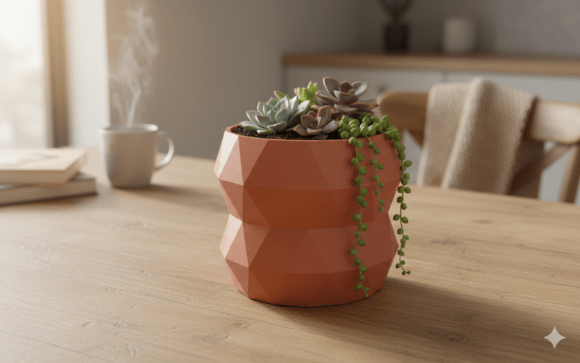
The core appeal of this model lies in its low-poly construction. Unlike organic, smooth-surfaced vessels that require high-resolution printing to avoid visible layer lines, the faceted nature of this geometric planter embraces the inherent texture of Fused Deposition Modeling (FDM) printing. The design utilizes a stacked geometric structure that creates a dynamic interplay of light and shadow. When placed near a window or under office lighting, the angled faces cast varying shadows throughout the day, adding visual depth to a desk or shelf without requiring complex post-processing.
From a design perspective, the "modern" descriptor is accurate. The clean lines and absence of ornate detailing align well with minimalist interior trends popular among entrepreneurs and designers who curate their workspaces carefully. The model is scaled specifically for standard 10cm x 10cm pots, a common size for succulents, cacti, and small propagation cuttings. This specificity ensures that the outer shell serves as a decorative cache pot rather than a direct planting vessel, a distinction that significantly impacts its longevity and maintenance requirements.
Technical Specifications and Print Optimization
One of the most critical factors for any downloadable asset is its readiness for production. The Modern Geometric Planter 3D Model for 3D Print is marketed as being optimized for a seamless printing experience. In practice, this usually implies that the mesh is watertight, normals are facing outward, and the geometry does not contain non-manifold edges that could confuse slicing software. For users running batch prints overnight, such reliability is essential to prevent failed jobs and wasted filament.
The low-poly count offers tangible benefits during the slicing phase. Models with fewer polygons generally process faster in slicers and can often be printed with fewer support structures, depending on the orientation. The stacked design suggests that overhangs are managed through the angling of the facets, potentially allowing for support-free printing if oriented correctly. This reduces material waste and eliminates the risk of support marks marring the visible surface of the planter. For a professional running a small business selling printed goods, minimizing post-print cleanup time directly correlates to higher throughput and better profit margins.
Material Considerations and Finish
While the digital file provides the form, the choice of material defines the final quality. Given the geometric nature of the design, matte filaments such as PLA Matte, PETG Matte, or even wood-filled composites tend to perform exceptionally well. These materials diffuse light across the faceted surfaces, softening the layer lines and enhancing the stone-like or ceramic appearance that many users seek. Conversely, high-gloss filaments might accentuate the layering, which could either be a desired stylistic choice or a detriment depending on the viewer's preference. The rigidity of the printed part is also crucial; since this is a decorative shell, standard PLA is sufficient, but users intending to move the planter frequently might prefer the slight flexibility and impact resistance of PETG.
Practical Utility and Limitations
A thorough evaluation must address the functional constraints of the design. A notable specification of this model is the absence of drainage holes. This is a deliberate design choice common in cache pots, where the inner plastic nursery pot holds the soil and water, while the 3D printed shell provides the aesthetic exterior. For the end-user, this means the system relies on the inner pot for plant health. If a user attempts to plant directly into the 3D printed shell without modifying it, root rot becomes a significant risk due to water accumulation at the base.
This limitation necessitates a specific workflow. Users must either maintain the dual-pot system or possess the tools and knowledge to drill drainage holes into the printed base post-production. For educators teaching design thinking, this presents an excellent opportunity to discuss modular design and the importance of understanding plant biology alongside digital fabrication. However, for a casual user seeking a "print and plant" solution, this requirement adds a step that must be clearly communicated to avoid plant loss.
Furthermore, the 10cm x 10cm scaling limits the variety of plants that can be housed. While ideal for succulents, snake plant cuttings, or pothos propagations, it cannot accommodate larger foliage or deep-rooted species. This restricts its application to specific niches within home decor, such as desktop accents, bathroom shelves, or grouped displays on floating shelves. It is not a standalone statement piece for a floor corner but rather a component of a larger decorative strategy.
Target Audience and Use Cases
Who benefits most from integrating the Modern Geometric Planter 3D Model for 3D Print into their workflow? The primary demographic includes small business owners operating Etsy shops or local markets who need consistent, high-quality products that print reliably. The geometric design allows for rapid production cycles, and the universal appeal of modern decor ensures a broad customer base. Additionally, corporate gift coordinators or office managers might utilize these models to create uniform, branded desk accessories that elevate the professional environment without cluttering it.
Freelance designers and architects may also find value in using these printed models as physical mood board elements or scale references for larger landscape projects. The ability to quickly produce a tangible representation of a geometric concept aids in client presentations. For hobbyists, the model serves as an excellent benchmark for testing new filaments or calibrating printer settings, as the flat planes reveal inconsistencies in extrusion or bed leveling more readily than curved surfaces.
Long-Term Value and Adaptability
The long-term value of this digital asset depends on its adaptability. While the provided file is fixed at a specific scale, users with CAD skills can import the STL or OBJ files into software like Blender, Fusion 360, or Tinkercad to modify dimensions, add custom logos, or integrate drainage systems. This flexibility transforms a static download into a customizable template. Even without modification, the timeless nature of geometric forms suggests that the design will not quickly fall out of style, ensuring that prints produced today remain relevant in home decor contexts for years.
However, potential buyers should manage expectations regarding the "perfect" fit for all 10cm pots. Manufacturing tolerances in both the 3D printing process and the injection molding of standard nursery pots can vary. A snug fit is desirable to prevent the inner pot from sliding, but slight adjustments in the model's wall thickness or internal dimensions may be necessary to accommodate different brands of plastic liners. This reinforces the idea that the file is a starting point for customization rather than a one-size-fits-all industrial solution.
Final Assessment
The Modern Geometric Planter 3D Model for 3D Print stands as a competent, purpose-driven digital asset that balances aesthetic sophistication with manufacturing practicality. Its strength lies in the low-poly architecture that complements FDM technology, turning potential printing artifacts into design features. The lack of drainage holes is not a flaw but a functional parameter that dictates its use as a cache pot system, requiring users to adopt a specific maintenance routine.
For professionals seeking reliable, visually striking objects for commercial sale or office enhancement, this model offers a solid foundation. It minimizes printing risks while maximizing visual impact through light interaction. Yet, its utility is bounded by its specific sizing and the need for an inner liner. Users who understand these parameters and are prepared to integrate them into their workflow will find this geometric planter to be a valuable addition to their digital inventory, capable of producing consistent, high-quality results that bridge the gap between digital design and tangible home decor.