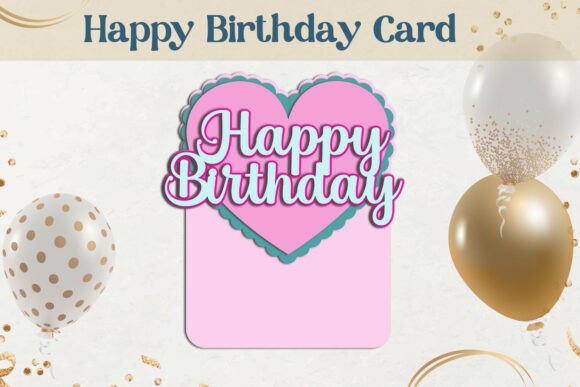
Evaluating the Heart Birthday Card SVG: A Guide to 3D Layered Paper Crafting
The landscape of handmade greeting cards has shifted dramatically with the advent of digital cutting technology. Among the most popular designs currently circulating in the crafting community is the Heart Birthday Card SVG, specifically those engineered for 3d Layered Card construction. This style of card moves beyond traditional flat paper folding, utilizing multiple layers of cardstock to create depth, shadow, and a tactile experience that flat printing simply cannot replicate. For adults exploring DIY gift options, understanding the nuances of this format is essential before investing time and materials.
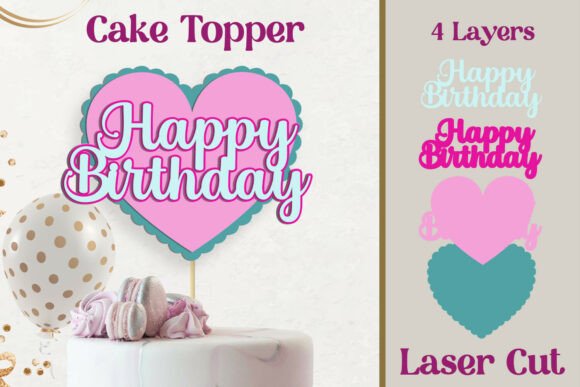
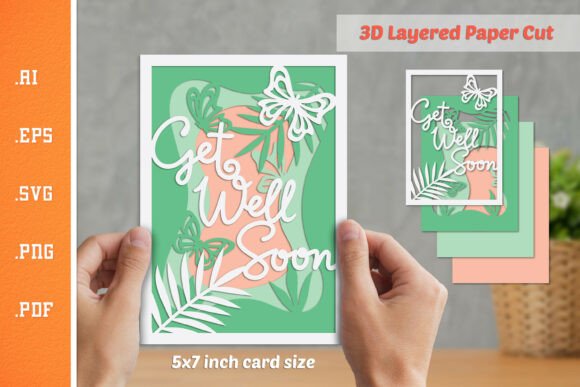
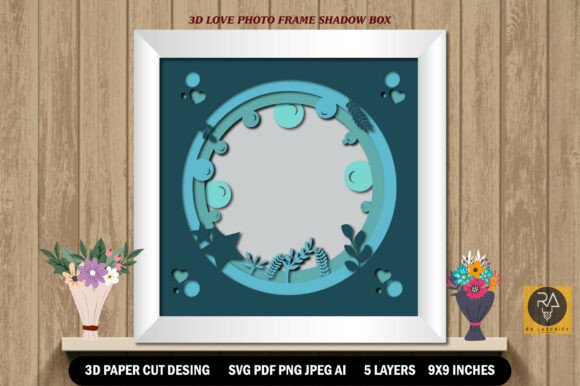
A 3d Layered Card based on a heart motif typically consists of several distinct files, each representing a different plane of the design. When assembled, these layers stack to form a dimensional heart, often accompanied by birthday sentiments, balloons, or floral elements that appear to float above the background. The core of this project lies in the digital file formats. Unlike a static image you might print from a standard home printer, these designs rely on vector paths that tell a machine exactly where to cut. The primary formats you will encounter include SVG (Scalable Vector Graphics), DXF (Drawing Exchange Format), EPS (Encapsulated PostScript), and AI (Adobe Illustrator). Additionally, PNG files with transparent backgrounds are often included for preview purposes or sublimation projects.
Comparing Cutting Methods: Machines vs. Hand Cutting
One of the first decisions a crafter must make when approaching a Heart Birthday Card SVG project is the method of execution. While the end result—a stunning dimensional card—remains the same, the path to get there varies significantly based on the tools available.
Electronic Cutting Machines
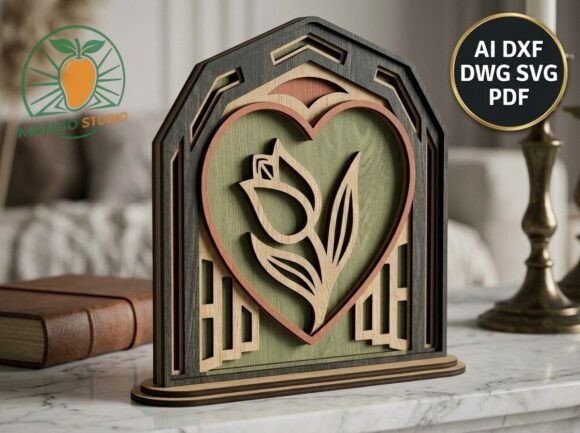
For many, the appeal of using files compatible with Cricut, Silhouette, Brother, or Glowforge machines is speed and precision. These devices excel at handling the intricate details often found in 3d Layered Card designs. A laser cutter like the Glowforge can burn through layers of wood or thick acrylic, but when used on cardstock, it offers unparalleled accuracy for tiny text or delicate filigree within the heart shape. Similarly, blade-based machines like the Cricut or Silhouette are optimized for paper. They read the SVG or DXF data to execute cuts in minutes that might take hours by hand. The trade-off here is the initial investment in hardware and the learning curve associated with the proprietary software required to operate these machines.
Manual Cutting
Conversely, the option to cut these files by hand should not be overlooked. If you possess a steady hand, a sharp craft knife (such as an X-Acto), and a self-healing mat, you can achieve excellent results without purchasing expensive equipment. Most Heart Birthday Card SVG packages include PDF or printable versions, or you can import the vector files into free software to print outlines on cardstock. The advantage of hand cutting is the low barrier to entry and the meditative quality of the work. However, the limitation is time and consistency. Creating a 3d Layered Card requires cutting multiple identical or progressively sized layers. Doing this manually increases the risk of slight variations between layers, which can affect the final symmetry of the 3D effect. Furthermore, very small interior details in complex heart designs may prove frustrating to weed out by hand.
File Formats and Software Compatibility
Understanding the technical specifications of your purchase is critical for a smooth workflow. When you acquire a Heart Birthday Card SVG bundle, you are typically receiving a Zip file containing a suite of formats: AI, EPS, SVG, DXF, and PNG. Each serves a specific purpose depending on your software ecosystem.
- SVG: The industry standard for web-based cutting software like Cricut Design Space and Silhouette Studio (basic version). It preserves vector data, allowing you to scale the heart design to any size without losing resolution.
- DXF: Often used as a backup for older versions of cutting software or specific CAD programs. It is a robust format for ensuring compatibility across different platforms.
- AI and EPS: These are professional-grade vector formats intended for users with Adobe Illustrator or CorelDRAW. They offer the deepest level of editability, allowing advanced users to manipulate anchor points, combine paths, or completely redesign the heart structure before sending it to a cutter.
- PNG: A raster image format. While not cuttable in the vector sense, a high-resolution PNG (300 DPI) with a transparent background is invaluable for visualizing the final product, creating digital invitations, or using with heat press machines for sublimation.
It is imperative to verify that your specific software and machine accept these formats prior to purchase. For instance, if you only have access to basic software that does not support EPS or AI, ensure the package includes the SVG or DXF variants. All vector files in a quality package should be editable, meaning you can change colors to match a specific theme or resize the elements to fit different card bases directly within your cutting software.
Design Flexibility and Customization Potential
The true power of a digital 3d Layered Card file lies in its adaptability. Unlike buying a pre-made card from a store, a digital download allows you to tailor the project to the recipient. Because the files are vectors, you can separate the layers in your software. Perhaps the recipient prefers blue over red; you can easily swap the color values for the heart layers. Maybe you need the card to fit a non-standard envelope; you can scale the entire Heart Birthday Card SVG group up or down while maintaining crisp cut lines.
This customization extends to the layering strategy itself. A standard design might come with five layers to create a moderate depth. However, an experienced crafter might duplicate certain mid-tone layers to increase the gradient effect, making the heart appear even more three-dimensional. Alternatively, you might choose to omit the innermost detailed layer if you are using a textured paper that obscures fine details. This level of control is what distinguishes digital crafting from traditional methods.
Material Considerations and Assembly
While the digital file provides the roadmap, the physical materials determine the structural integrity of your 3d Layered Card. Not all cardstock is created equal. For layered projects, weight is a crucial factor. If the paper is too thin (below 65 lbs), the layers may warp when glued, ruining the 3D illusion. If it is too thick (above 110 lbs), the adhesive may struggle to hold the stack together, and the folds may crack. A weight between 80 lbs and 100 lbs is generally the sweet spot for most Heart Birthday Card SVG projects.
Adhesive selection is another variable. Foam tape is commonly used between layers to create physical spacing, enhancing the shadow effect. However, liquid glue or double-sided sheets provide a flatter, more seamless look if the design relies on color gradients rather than physical height. When assembling, alignment is key. Using registration marks printed by your machine or carefully aligning corners by hand ensures that the concentric heart shapes remain perfectly centered.
When to Choose This Format Over Alternatives
Deciding whether a Heart Birthday Card SVG is the right choice depends on your goals and constraints. This format is ideal if:
- You plan to make multiple cards. Once the file is purchased and the machine is set up, producing ten cards takes marginally longer than producing one, offering excellent value for batch crafting.
- You desire a high-end, boutique look. The dimensional aspect of these cards mimics expensive stationery found in specialty shops.
- You enjoy the process of assembly. These projects are part cutting, part puzzle-solving.
However, this approach may not be suitable if you need a card immediately and lack the materials on hand, or if you find the technical aspects of file management and machine calibration overwhelming. In such cases, a pre-cut kit or a traditional flat card design might be a less stressful alternative. Additionally, if your cutting machine has a small mat size, you may need to slice the SVG file into sections, which adds complexity to the assembly process.
In conclusion, the Heart Birthday Card SVG designed for 3d Layered Card creation represents a versatile intersection of digital convenience and analog artistry. Whether you utilize a high-tech laser cutter, a consumer blade machine, or simple hand tools, the vector-based nature of these files ensures precision and repeatability. By understanding the file formats, material requirements, and assembly techniques, you can leverage these resources to create personalized, memorable gifts that stand out in a world of mass-produced greetings. Always remember to check your software compatibility before downloading, and enjoy the creative freedom that editable vector files provide.