Bringing Retro Charm to Life: The Cartoon Camera 3D Model for Printing
In an era where digital imagery is instantaneous and often ephemeral, there is a growing cultural appreciation for the tangible artifacts of photography's past. This nostalgia has found a unique expression in the world of additive manufacturing, specifically through designs like the Cartoon Camera 3D Model for Printing. This isn't just a replica; it is a stylized interpretation of classic film cameras, reimagined with rounded shapes, appealing proportions, and a distinct retro look that bridges the gap between vintage aesthetics and modern fabrication technology.
The appeal of this model lies in its ability to capture the soul of mid-century photography equipment without the mechanical complexity. By focusing on simple volumes and clear reading, the design creates a fun, nostalgic piece full of personality. For collectors, creative studios, film lovers, and those working on themed projects, this object serves as more than just decor; it is a conversation starter that reflects a deeper interest in the history of visual storytelling.
The Resurgence of Tangible Nostalgia in Digital Workspaces
The popularity of the 3D cartoon-style model inspired by classic film cameras is not an isolated phenomenon. It mirrors a broader shift in how professionals and hobbyists curate their physical environments. As remote work and digital creation become standard, there is a counter-movement to inject warmth and character into home offices and studios. People are moving away from sterile, minimalist setups toward spaces that tell a story.
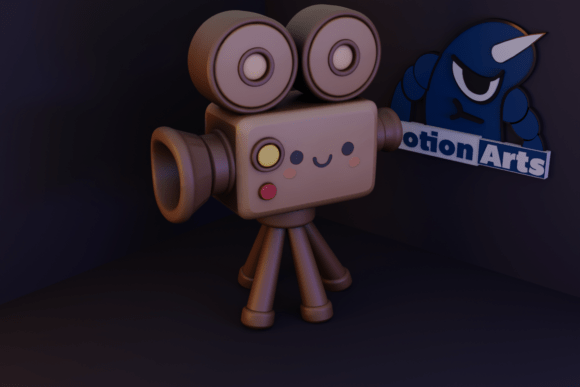
This specific camera design fits perfectly into this trend. Its compact body and integrated tripod offer a silhouette that is instantly recognizable yet playful. Unlike hyper-realistic scans that might look out of place on a modern desk, this cartoonish approach softens the aesthetic. It acknowledges the history of photography while embracing a whimsical, approachable vibe. For marketers and content creators, placing such an item in the background of a video stream or a product photo adds a layer of authenticity and creative flair that resonates with audiences tired of overly polished, corporate imagery.
Furthermore, the dual upper lenses and protruding details provide a strong visual identity. In a market saturated with generic props, owning a unique, 3D-printed piece allows individuals to stand out. It signals an appreciation for craft—not just the craft of photography, but the craft of making the object itself.
Design Philosophy: Balancing Aesthetics and Printability
Creating a successful 3D print requires a delicate balance between artistic vision and technical feasibility. The design of this camera model prioritizes simple volumes, which is a strategic choice for both visual clarity and printing success. Complex, organic curves can sometimes result in messy layer lines or structural weaknesses if not handled correctly. However, the rounded shapes here are engineered to be robust.
The front details are subtle yet well-defined, ensuring that the model retains its charm even when printed in a single color or with basic materials. This clean aesthetic makes it versatile. Whether painted to look like aged leather and brass or left in a sleek monochrome finish, the form holds up. The composition features an integrated tripod, which adds to the stability and display options of the piece. It allows the camera to stand proudly on a shelf, mimicking the stance of a real device ready to capture a moment.
For designers and makers, this model represents a case study in "design for manufacturing." Even at a beginner level, the model teaches important lessons about how to translate a 2D concept or a mental image into a 3D object that can be physically realized. The protruding parts, such as the lenses and the tripod legs, require proper planning in slicing to ensure a good finish. This necessity encourages users to engage more deeply with their slicing software, understanding support structures and orientation.
Practical Implications for Makers and Beginners
One of the most significant aspects of the Cartoon Camera 3D Model for Printing is its accessibility. Tagged with a Level Beginner rating, it opens the door for those new to 3D printing to achieve high-quality results without frustration. However, "beginner-friendly" does not mean "effortless." The presence of protruding parts means that support generation is crucial.
When preparing the STL file for printing, users must consider the orientation of the model on the print bed. Printing the camera upright might require extensive supports for the overhanging lenses and the top plate, which could leave blemishes on the visible surfaces. Alternatively, printing it on its side or back might minimize supports on the front face but could require careful removal from the build plate. This decision-making process is a valuable skill for any creator.
- Support Strategy: Since the model requires support, using tree supports or lightweight linear supports can make post-processing easier and reduce material waste.
- Layer Height: To capture the subtle details of the dials and lens rings, a finer layer height (e.g., 0.12mm or 0.16mm) is recommended over the standard 0.2mm.
- Material Choice: PLA is ideal for this project due to its ease of use and ability to hold fine detail. However, for a more premium feel, PETG or even wood-filled filament can enhance the retro aesthetic.
- Post-Processing: The rounded shapes are forgiving, but care must be taken when removing supports from the integrated tripod to avoid snapping thin sections.
For educators and workshop leaders, this model serves as an excellent teaching tool. It combines historical context with practical engineering challenges. Students can learn about the evolution of camera design while simultaneously mastering the basics of slicer settings and support management.
Versatility in Creative and Commercial Applications
Beyond personal decoration, the utility of this 3D cartoon-style model extends into various professional realms. For creative studios, these models can be used as props in stop-motion animation, where their exaggerated proportions and sturdy build make them easy to manipulate. The distinct look helps them pop on camera, providing a stylized element that fits well with animated or illustrative content.
Entrepreneurs and small business owners can also leverage this design. Custom-painted versions can serve as unique awards, client gifts, or limited-edition merchandise for photography blogs and podcasts. The nostalgic theme appeals strongly to the demographic of film photographers and vintage enthusiasts, creating a niche market for hand-finished prints.
Moreover, the model's adaptability allows for customization. Users can modify the STL file to add logos, change the text on the camera body, or alter the scale to create keychains or larger display pieces. This flexibility ensures that the model remains relevant across different projects and branding needs.
Navigating the Slicing Process for Optimal Results
To truly appreciate the Cartoon Camera 3D Model for Printing, one must respect the technical requirements involved in bringing it to life. The prompt notes that support is required, and this is the critical juncture where a good print becomes a great one. The dual upper lenses create significant overhangs. If sliced without care, these areas may sag or fail to adhere properly.
A realistic approach to slicing this model involves analyzing the geometry before hitting "print." Users should visualize where the support interfaces will touch the model. Ideally, supports should be placed on non-visible underside areas. For the integrated tripod, ensuring that the legs have sufficient contact with the build plate or adequate support underneath is vital to prevent warping during the print.
Additionally, the "clear reading" of the design means that surface quality is paramount. Any stringing or z-banding will be immediately noticeable on the smooth, rounded bodies. Therefore, tuning retraction settings and ensuring the printer is well-calibrated are essential steps. The goal is to achieve a finish that looks almost injection-molded, highlighting the clean aesthetics and strong visual identity of the original design.
Conclusion: A Charming Addition to the Maker's Library
The Cartoon Camera 3D Model for Printing stands out as a charming and versatile piece in the vast library of available 3D models. It successfully merges the emotional resonance of retro photography with the innovative potential of modern 3D printing. Whether you are a seasoned collector looking to expand your display, a beginner eager to tackle a project with character, or a professional seeking unique assets for a creative campaign, this model delivers.
Its design prioritizes fun and personality without sacrificing structural integrity. The requirement for support planning offers a gentle learning curve that rewards attention to detail with a high-quality finish. As we continue to navigate a world that is increasingly digital, holding a physical object that celebrates the history of image-making provides a grounding, satisfying experience. This model is not just a plastic reproduction; it is a tribute to the art of photography, reinterpreted for the age of makers.
For those ready to start printing, remember that the journey from STL file to finished object is part of the creative process. With the right settings and a bit of patience, the result is a delightful homage to classic cameras that brings a smile to anyone who sees it. 🎬📸